Posted by: admin
Comments: 0
Post Date: 15.07.2016
Service Provider MVNO (Thin MVNO)
This is custom heading element

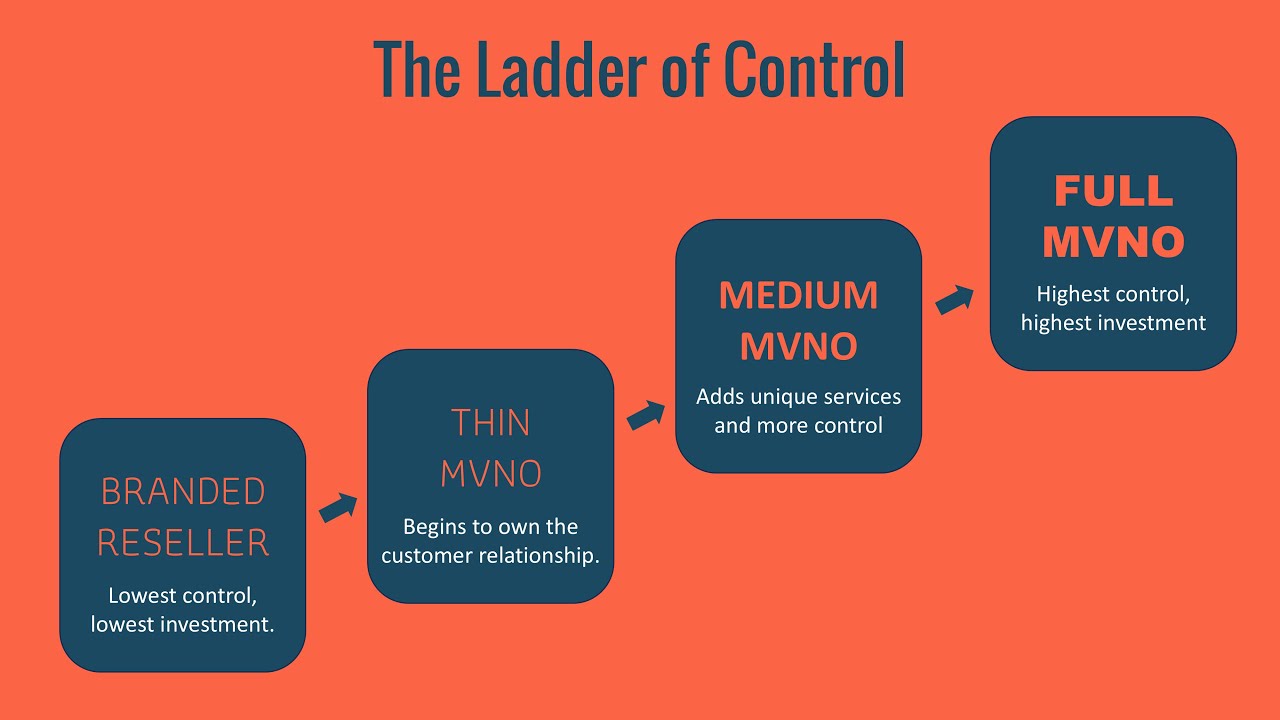
The service provider MVNO (Thin MVNO) operates under its own brand. In the best-case scenarios, the MVNO brings a specific concept, brand, distribution channels, or a large existing customer base to the table, from which it can leverage its sales or differentiate itself from the competition.
Thin MVNO Model - Advantages
- Self-owned SIMs, customer ownership and relationship is possible, as well as some ability to set tariff bundles and packages independently from the retail prices set by the host network operator, depending on the wholesale agreement model (retail-minus, cost plus, capacity-based, etc.).
- Use the MVNO to capture a share in the mobile market and generate telecommunications revenue—or to drive an uplift in the core business (bundles).
- Focus on addressing a particular niche or segment.ing retail price offer from the HNO.
Thin MVNO Model - Disadvantages
- Costs on OPEX and CAPEX are associated with the IT platforms.
- Limited access to and control of network routing capabilities.
- Owns the customers and SIMs but not the International Mobile Subscriber Identity (IMSI).
Thin MVNO Model - Operational Model / Architecture
- The Service Provider MVNO (Thin MVNO) is normally responsible for the customer care processes, including customer relationship management (CRM), support, billing processes and billing platform (BSS), tariffs, bundles and promotion packages, costs of marketing, sales, and distribution, as well as the OPEX and CAPEX associated with the IT platforms.
Thin MVNO Model - Business Model
- Revenues: from traffic of its own customers (owns the customers, but not the IMSIs).
- Costs: Wholesale rates, marketing, sales, distribution, OPEX/CAPEX associated with the IT platforms.
- Wholesale rates may vary with the type of voice/data/SMS/MMS, e.g., On-Net or Off-Net, National or International (origin/destination).
- Revenues from incoming traffic (Off-Net) would typically belong to the host network operator (HNO).
- In some cases, revenue might be shared with the HNO, i.e., a certain gross margin over the existing retail price offer from the HNO.
Additional MVNO Type & Operational Models Information
For a visual deep-dive, watch our video on Thin • Medium • Full – MVNO Types and Operational Models.
Check out our podcast: “Enabling MVNO Success: A Guide to MVNE” – on Spotify or SoundCloud
[stm_sidebar sidebar=”7832″]