YouTube Superstar MrBeast Reportedly Planning His Own MVNO
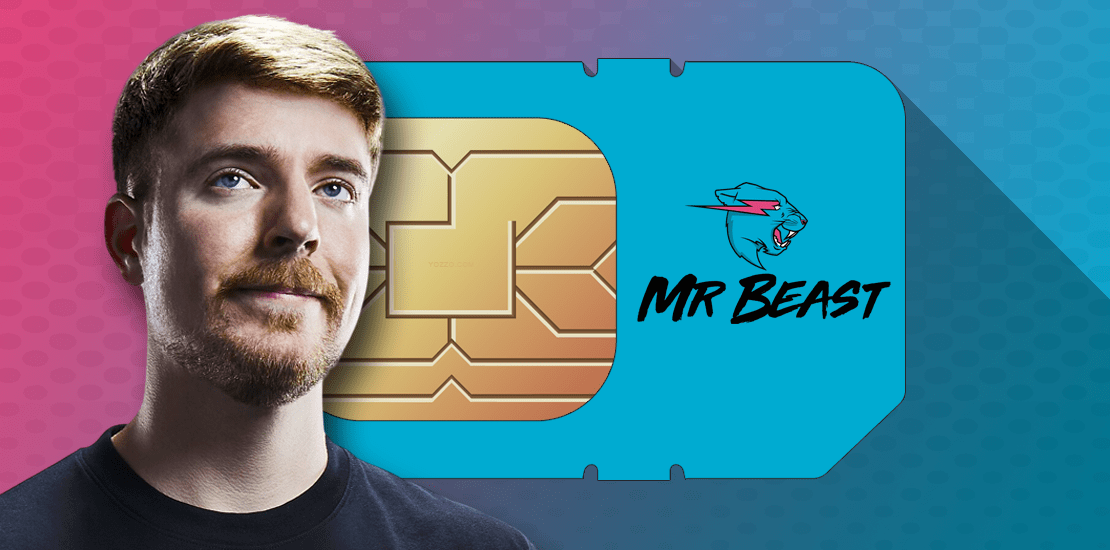
YouTube star MrBeast is reportedly planning to launch his own MVNO, to expand his business empire.
YouTube sensation MrBeast, is reportedly setting his sights on the mobile service market. According to a leaked investor deck from early 2025, MrBeast plans to launch a mobile virtual network operator (MVNO) in 2026.
James Stephen “Jimmy” Donaldson, commonly known by his online alias MrBeast, is an American YouTuber, media personality, and businessman. The 27-year-old creator with over 427 million YouTube subscribers, is reportedly looking to enter the mobile service market, with plans to launch his own mobile virtual network operator (MVNO).
Converting Millions of Followers to MVNO Customers
According to an investor deck from early 2025 viewed by Business Insider, MrBeast aims to debut his mobile service in 2026. While a person close to the company stated the project is not an immediate priority, it’s part of a larger, long-term plan to expand beyond media ventures like his YouTube channel and reality competition show.
MrBeast, with over 400 million subscribers across his YouTube channels, and 119 million followers on Tik Tok, could convert this existing assets of dedicated fans into MVNO customers, creating a formidable business.
Celebrity MVNOs
MrBeast isn’t the first celebrity to see the potential in the MVNO market. The trend is already well-established internationally, particularly in Mexico where popular YouTubers have successfully launched their own MVNOs:
Luisito Comunica (MVNO PilloFon): A prominent travel vlogger, he launched PilloFon in 2020. It quickly became one of Mexico’s fastest-growing MVNOs, showcasing the immense power of a creator’s brand and influence.
REVO, a newly launched MVNO from the two YouTubers Jimmy Álvarez and Andrés Neshudo who have launched a MVNO with a social cause, using profits to support foundations for children with cancer, dog rescue, and environmental programs. You can read more about REVO here.
Kimberly Loaiza (MVNO Space Móvil): This top Mexican influencer and YouTuber also launched her own mobile operator service, Space Móvil, further cementing the trend of creators directly entering the mobile market.
The ease of launching an MVNO today, combined with the unparalleled reach of today’s digital stars, means that the era of generic mobile connectivity is giving way to a more tailored, community-driven, and ideologically aligned mobile experience.
Consumers are increasingly seeking services that resonate with their personal identities, passions, and beliefs, public figures and brands have recognized this potential.
There are currently between 2,000 and 2,300 MVNOs in operation worldwide—a stark contrast to the approximately 700 to 800 Mobile Network Operators (MNOs) that own the underlying network infrastructure globally. This growing market signals a shift from broad, all-encompassing network providers to more niche services that cater to specific audiences.
Expanding the MrBeast Empire
MrBeast’s move into the telecom space is part of a calculated strategy by Donaldson and his company, Beast Industries, to expand the MrBeast brand. His successful ventures already include, Feastables – A chocolate bar brand that has generated around $250 million in sales, MrBeast Burger, Lunchly – a food and snack brand similar to Lunchables, and he is the creator of the reality competition television series, Beast Games.
The company has also reportedly considered branching into other industries, such as fintech and mobile gaming – where a MVNO would be perfectly suited, as a bridge between such.
This strategic direction is further evidenced by a recent trademark application filed by Beast Holdings for “MrBEAST FINANCIAL”. The application details a wide range of financial goods and services, including downloadable software (mobile application) for banking, short-term cash advances, cryptocurrency exchange services, investment banking, consumer lending, and insurance services.
The application also covers online banking, issuing credit and debit cards, cryptocurrency payment processing, and providing financial advisory and consulting services.
"Additional
Check out our MVNO Knowledge Hub Video: Why MrBeast, your favorite sports club, or cause wants to be your phone company.
Introduction to the Yozzo Podcast
Hi, and welcome to Yozzo’s podcast dedicated to empowering mobile virtual network operators with the insights they need to succeed. This is the place where we break down the complexities of the MVNO ecosystem. Let’s get started.
Mr. Beast’s Mobile Service
All right, let’s get right into it. We all know Mr. Beast, right? The guy with the insane challenges giving away just mountains of cash. But what if his next huge thing wasn’t a video, but your phone plan? Yeah, you heard me. Today, we’re going to break down exactly how and why your favorite creator, your favorite brand, or even your favorite sports team wants to be your new phone company.
Yep, it’s true. Reports are flying around. There was even a leaked investor deck. The world’s biggest YouTuber, Jimmy Donaldson, is apparently planning to launch his very own mobile service. Now, I know that sounds absolutely wild, but stick with me ’cause it’s actually part of a much bigger and honestly super fascinating trend that’s happening right now. And look, when we say biggest, we are not kidding. We’re talking over 427 million subscribers on YouTube alone. I mean, that is more than the entire population of the United States. That’s not just a fan base, you guys. That’s a potential customer base on a scale we’ve literally never seen before.
So the big question is, how on earth can a YouTuber just decide to start a phone company?
The Secret: What is an MVNO?
Well, the answer, the whole secret to all of this comes down to an acronym that is quietly changing the entire telecom industry: MVNO. This is the secret sauce. This is what makes the whole thing possible. So an MVNO or Mobile Virtual Network Operator is basically a company that sells you phone service under its own name. But here’s the kicker: they don’t actually own any of the cell towers or the cables or any of that physical stuff. Just like the name says, they are virtual operators.
Okay, so here’s the most important thing to get. On one hand, you have the big mobile network operators, the M’s. You know them: Verizon, AT&T, T-Mobile. They’re the ones who actually own all the infrastructure. But then you’ve got the MVNOs and they just rent wholesale access to that network and then they resell it to you under their own cool brand. Think of it like this: they’re renters, not owners.
And you’d be forgiven for thinking this is some small niche corner of the market, but just look at these numbers. Globally, for the roughly 800 companies that own the networks, there are nearly three times as many virtual operators reselling their service. So, no, this isn’t some little fad. This is a massive, thriving ecosystem.
So, what’s going on here? Why the sudden boom? It’s not just because a bunch of famous people are throwing their hats in the ring. No, there are some really powerful things happening under the surface that are driving this whole surge. And it’s turning mobile service from just, you know, a utility into something much more personal. This whole boom is really being fueled by a kind of perfect storm. You’ve got consumer demands that are changing, creators looking for new ways to make money off their huge audiences, and of course, every success story just encourages more people to try it.
But you know what the biggest driver is?
Why Are MVNOs Booming?
It has become shockingly easy to actually launch one of these things. Okay, so let’s start with the customers. Us. The big network operators, they have what you could call a one-size-fits-all problem. They basically treat every single one of us the same, right? They offer these generic plans that are trying to appeal to absolutely everyone, but in the end, they don’t really get anyone that excited. You know, this old quote from Henry Ford just nails the mindset of the big carriers: “You can have any color you want as long as it’s black.” They give you a reliable product for sure, but there’s almost no personalization, no choice. It’s a mass market utility, not something tailored for you.
And this is a fantastic way to think about who gets left behind in that model. I mean, does your grandma really need some high-tech AI chatbot for customer service? Probably not. Does a company’s CFO care about getting a free Netflix subscription with their phone plan? Nope. And if you’re a diehard sports fan, do you really want to be paying a mobile company that sponsors your biggest rival? Of course not. All that dissatisfaction, well, that creates a massive opportunity.
The “Helper” Companies (MVNEs & MVNAs)
And that brings us right back to the secret sauce that makes this whole thing work. How is it possible for a YouTuber or a sports team to just wake up one day and say, “Hey, I’m a phone company now.” It’s because they don’t actually have to build any of it themselves.
It’s all possible because of two types of helper companies that do all the heavy lifting. First, you’ve got the MVNE, the enabler. Think of them as the tech department. They handle all the software for billing, for customer support, all that stuff. Then you have the MVNA, the aggregator. They’re like a wholesaler. They go to the big networks, buy up a ton of network access in bulk, and then sell it off in smaller chunks to the MVNOs.
Honestly, here is the absolute best way to think about it. These enablers, they are basically the Shopify for starting a phone company. Seriously, they give you a ready to go platform that handles all the complicated, messy, technical stuff, which lets a brand like Mr. Beast focus on what they do best: marketing and talking to their audience.
And this leads to a really fundamental difference in what everyone is trying to achieve here. A big M like Verizon, their main goal is to make money by selling you connectivity. Simple. But for a lot of these MVNOs, especially the ones run by creators, the phone plan is just a tool. The real goal is to make you a more loyal fan, to gather data, and ultimately to upsell you on their main business. Whether that’s merch or videos or, you know, chocolate bars.
All right, so as you’re probably getting by now, this is way, way bigger than just Mr. Beast.
Examples of MVNOs in the Real World
This trend is happening all over the world and it cuts across pretty much every industry you can think of. Let me show you some examples. Take entertainment. You’ve got massive success stories like Ryan Reynolds with Mint Mobile, of course, but it’s also podcasters like the guys from Smartless. And it’s global stars, too, like Lissa Manoella in Brazil. She built a plan specifically for her young fans that came with perks like unlimited Tik Tok. See, it’s all about knowing exactly who you’re talking to.
Sports might just be the most perfect fit for this model. Clubs from Celtic in Scotland to FC Barcelona in Spain are all getting in the game. And why not? For a true diehard fan, using your team’s mobile plan isn’t just about getting a signal. It is the ultimate badge of honor, the ultimate show of loyalty. And of course, big retail brands have been doing this for years. They use their mobile plans to double down on their main identity. Tesco Mobile in the UK is all about value, just like their stores. Red Bull Mobile is all about that high energy lifestyle, and it can be wildly successful. I mean, in Mexico, Walmart’s mobile brand is the undisputed market leader. Think about that.
And this trend goes even deeper all the way to our personal beliefs. In the US, you’ve got Patriot Mobile for conservatives and CREDO for progressives. In Brazil, a major church launched a plan for its congregation. In every one of these cases, your phone bill stops being just a utility payment. It effectively becomes a monthly donation to a cause you really believe in.
The Big Picture: A Shift in Identity
Okay, so let’s pull back for a second. What does all of this add up to? When you look at the big picture, what we’re really seeing is a fundamental shift in what a mobile plan even represents. Your phone service is changing. It’s moving away from being a simple invisible utility, you know, like your electricity or your water, and it’s turning into a very visible statement of your personal identity. It’s becoming another badge you wear that tells the world who you are and what you care about.
And what that really means for all of us is that picking a mobile provider isn’t just about the price or how many bars of coverage you get anymore. It’s becoming another conscious choice we make as consumers. It’s another way to vote with your wallet and directly support the communities, the creators, and the causes that actually matter to you.
Which brings us to the final question.
And this one’s for you to think about. Just for a second, forget the big faceless corporations. If your absolute favorite sports team or your favorite musician or maybe even your favorite local coffee shop offered you a phone plan with some cool unique perks, would you switch?
Outro
And that wraps up another episode of Yozzo’s podcast. If you want to dive deeper into today’s topic, you can find much more resources at yozzo.com. We’ll be back next time with more insights. Until then, keep innovating.