How Two Telcos and a Rigged Regulator Abandon Millions
AIS officially admits their 4G network is “congested and obsolete” leaving millions paying for a dying service while the NBTC fails to enforce standards.
While the billboards for the two telecom operators AIS and True in Thailand have promised a gleaming “5G Revolution,” for five years now, an internal regulatory document and a string of 2025 scandals reveal a much darker reality.
Thailand’s telecommunications sector has devolved into a protected duopoly where the giants admit to network failure, the regulator rigs the rules, and citizens in disaster zones are left to die in digital silence.
The AIS Confession: "4G is Obsolete and Congested"
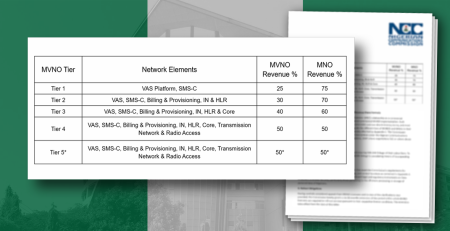
The smoking gun is found in a formal filing from Advanced Wireless Network (AWN), the network arm of AIS. In a bid to block mobile virtual network operators (MVNO) competitors from getting mandated access to its infrastructure, AIS made a startling admission to the National Broadcasting and Telecommunications Commission (NBTC).

The company officially argued that it could not grant network access because its “4G network is currently facing high congestion and has reached its capacity limits.” Even more alarming, AIS claimed that “4G technology is becoming obsolete.”
This is a confession of systemic neglect. While AIS reported a staggering net profit of 12.04 billion Thai Baht ($383.1 million ) in Q3 2025, it is saying that the service millions of people pay for is a “dead end.”
As of late 2025, AIS serves 46.3 million subscribers, yet only 15.8 million are on 5G. This means 30.5 million AIS users (66%) are being told their network is “obsolete” while they continue to pay – (more than) full price for it.
The message is clear: if you aren’t on an expensive 5G plan, AIS views you as a second-class citizen.
Since the True DTAC merger, complaints in the telecom sector have experienced a violent surge, leaping from fewer than 1,000 cases to nearly 3,000 in just the first seven months of 2025.
A damning independent survey by the Foundation for Consumers revealed that a staggering 81% of users reported significant network issues—ranging from dropped calls to total data failure. As the giants report record-breaking billions in profit, their customers are left paying a “duopoly tax” for service that is demonstrably worse than it was.
The regulator has as usual done nothing else than to brush it aside saying they will measure it themselves. Status on that measurement is the same as everything else from them = Not enforced.
The Rigged 2025 Auction
How did the duopoly become so bold? Look at the June 2025 spectrum auctions. Under the leadership of NBTC Chairman Clinical Prof. Dr. Sarana Boonbaichaiyapruck, the process was widely condemned as a “rigged theater.”
The terms were designed so that only AIS and True could effectively qualify. AIS secured vital 2100 MHz spectrum, while True scooped up blocks in the 2300 MHz and 1500 MHz bands.
Most damningly, the Chairman’s office removed the rollout penalty clauses from the core auction terms which has been in every spectrum license since the first auction in 2013. Despite pleas from consumer councils and a minority of the NBTC’s board members to include a 0.05% daily fine for failing to meet coverage targets, the majority board dismissed the proposal.
This allowed the giants to save billions by avoiding tower construction in “unprofitable” remote areas, leaving border zones in isolation.
When Lack of Enforcement Becomes Fatal
The consequences of this “profit-over-people” strategy were felt in a series of mounting crises throughout 2025.
The first major warning came on March 28, 2025, following a massive 7.7-magnitude earthquake centered in Myanmar. While tremors shook high-rises in Bangkok and caused significant damage in border provinces, both major networks suffered a catastrophic failure.
Even though the core infrastructure remained standing, the systems were paralyzed by a surge in demand that they were never built to handle. In a terrifying display of duopoly failure, True customers found themselves unable to call AIS customers and vice versa, as the inter-network connection points choked and died.
In the critical minutes when coordination was most needed, the signals were dead, proving that the infrastructure cannot handle even a few minutes of high-stress reality.
Just two months later, on May 22, 2025, the fragility of the duopoly was exposed again when a “core network” power failure at True Corporation triggered a nationwide blackout. For hours, millions of users across Thailand found their phones as useless as if they had no SIM cards at all. People were left in total digital isolation—unable to make emergency calls, use banking apps, or even contact customer support.
But the deadliest failure arrived in late November 2025 during the Hat Yai “Rain Bomb” floods—the worst in 300 years. As water levels rose to rooftop heights, the communication networks didn’t just stumble; they collapsed.
For nearly a week, residents were trapped on roofs with zero signal because the operators hadn’t invested in flood-resilient infrastructure.
Victims were left in a “digital void” exactly when they needed to call for rescue and information.
Together, these three incidents prove what happens when you only have two networks: you have a Single Point of Failure that leaves an entire nation vulnerable.
Enforcement from the “regulator” = none!
Border "War Zones": The Roaming Insult
In border provinces facing active conflict (war zones), the NBTC hasn’t fought for better signals – it has fought to kill them.

Under the guise of stopping “call center scams,” the NBTC ordered AIS and True countless times since 2015 – but never enforced – to use “Cell Radius” containment to intentionally weaken signals at the border.
Thai citizens in these war zone areas who are now being attacked by artillery fire from Cambodia find their phones “roaming” onto foreign networks or losing signal entirely.
The NBTC’s official advice is a direct insult: “Just disable roaming.” – along with an infographic on how to do that.
By prioritizing “scam prevention” over fundamental safety, the regulator and the operators have turned border communities into “no-signal” death traps.
The NBTC: A Duopoly Shield, Not a Watchdog
The NBTC which is supposed to be a regulator, has instead been a protection racket for the duopoly since it took office. There are to many examples to show here – but just to give a couple:
The MVNO Graveyard: The NBTC is not only allowing AIS and True to block MVNOs via made up rules (by the operators), opposite the written ones, the NBTC office (administrative arm) is actively helping AIS and True to avoid giving access to MVNOs by changing dispute cases in to mere complaints instead and introducing non-tariff barriers.
The Merger Enabling: The NBTC sat by and “acknowledged” the True-DTAC merger, creating the very lack of competition that allows these giants to ignore consumers today. For more than 1,000 days the NBTC has not enforced its own merger conditions on the merger.
Thailand’s telecommunications market is no longer about “connectivity” – it is about containment.
- AIS wants to contain you in expensive 5G plans by letting 4G rot.
- True wants to contain the market through post-merger dominance despite technical instability and massive subscriber churn.
- NBTC wants to contain competition to keep the giants happy.
Whether you are a 4G user in Bangkok, a flood victim in Hat Yai, or a resident in a border war zone, you are being told the same thing: Your safety and your service are not worth the cost of a tower.
It’s time to demand a regulator that actually regulates.
A Government "Missing in Action"
The most unsettling part of this crisis isn’t just a rogue regulator; it is the absolute silence from the top. While the Cabinet and the Prime Minister’s office hold the ultimate power to overhaul the NBTC and protect the public interest, they have remained “Missing in Action”
By allowing the NBTC to operate without any accountability, the government has essentially signalled that the profits of AIS and True are a higher priority than the safety of Thai citizens or the health of the broader economy.
Digital Economy and Society (DES) Minister Chaichanok Chidchob has spent much of late 2025 making bold headlines, threatening to revoke licenses for providing signal to scam centers on the borders. However, these threats have proven to be hollow.
The NBTC has not enforced any of these, instead it has continually moved the burden onto the people instead of the two operators
The government has the legislative power to restructure the NBTC and end the “Chairman-led” dominance that favors the duopoly. Instead, they have watched from the sidelines as the regulator ignores the rule of law, effectively killing off new business competition.
Protecting Profits Over People and Security
The government’s refusal to intervene has created a dangerous paradox. In a national embarrassment, international scam centers in Cambodia have been found using signals beamed directly from AIS and True towers along the border.
While these criminal syndicates enjoy strong Thai signals to rob Thai citizens, the villagers on our own side of the border are left in “no-service” zones with prices increasing due to lack of competition. This at a time where the rising households costs are a major issue in Thailand declining economy.
By turning a blind eye to the what is actually going on in the NBTC – the government has prioritized the operators’ balance sheets over national security and economy.
The Election Factor: Votes over “Servants”
Thailand is now entering a critical period. With the House of Representatives dissolved and a general election set for February 8, 2026, the political landscape is shifting. Historically, parties have relied on the “usual buying” of votes through populist handouts, but in 2026, there is a far more powerful currency: Fairness.
Nothing would resonate more with the 65 million neglected mobile users than a political promise to clean up the NBTC and its administrative office. The current office, and the ones before has acted as nothing but a collection of “servants” for AIS and True, enabling a market where competition is dead and the citizens are an afterthought.
Any party that promises to break the “gatekeeper” hold of AIS and True and force genuine competition will tap into a massive well of votes. The promise to replace the “duopoly-friendly” leadership at the NBTC with actual knowledgeable truly independent commissionaires and officers, is a policy that costs the government nothing but gains them everything at the ballot box.
Ensuring that disaster prone areas and border provinces never face another “digital blackout” is a matter of life and death that resonates far deeper than a 500-baht handout.