The MVNO Boom Mainstream Media Is Just Discovering
This is custom heading element
Trump Mobile highlights a trend mainstream media is just discovering: The MVNO Boom has reshaped how we connect.
The MVNO boom, despite what is written in mainstream news recently, is not a sudden phenomenon due to more celebrities entering the ring, but a natural evolution driven by changing consumer demands, technological enablers, and the strategic leveraging of existing brands and communities.
The Trump’s recent announcement of Trump mobile service seems to have finally caught the attention of mainstream media, creating a sudden buzz around Mobile Virtual Network Operators (MVNO).
While major news outlets are just now cluing in, the truth is, the convergence of celebrity, brand, and mobile connectivity is far from new. This trend has been evolving for decades, now experiencing an unprecedented surge fueled by digital reach and specialized service demands.
In the world of Mobile Virtual Network Operators (MVNO), companies strike deals with traditional network operators (MNOs) to buy access to their existing network capacity—often capacity that would otherwise go unused. They then repackage and sell it under their own brand, injecting unique innovation and service. This model has successfully driven competition for decades.
MVNOs Leveraging Existing Assets
Some of the most successful MVNOs are companies that have strategically used their assets—such as an established customer or follower base, strong brand affinity, and robust distribution channels—from their existing business.
They leverage these assets to create a unique MVNO positioning and value proposition, essentially using mobile networks as a vehicle to sell their existing services or deepen customer engagement.
One of the key competitive advantages for these MVNOs is their thorough knowledge of their customer segment. This deep understanding, often cultivated through years of engagement via their primary business, allows them to craft far more personal and relevant mobile offerings than MNOs can.
Fueling the Boom: Four Drivers Behind the MVNO Surge
What is further accelerating the already successful growth of MVNOs, is the volume and profile of individuals and brands entering the fray. This increasing growth is largely attributed to four key factors:
- Evolving Consumer Demand: Consumers are no longer just looking for generic connectivity; they crave tailored services that align with their lifestyles, values, or passions. This shift creates fertile ground for public figures and brands to integrate a piece of their brand directly into the daily life of the followers/users.
- Monetizing Digital Reach: Celebrities, brands, and influencers are looking to expand their reach and monetize their followers, views, and likes. They achieve this by upselling existing core businesses and providing premium or VIP treatment and services to their fan or follower base.
- Self-Perpetuating Cycle: The increasing involvement of celebrities, brands, and influencers in the MVNO space creates a powerful, self-perpetuating cycle. They not only spread information about MVNOs and customized mobile/lifestyle services to their own audiences but also extend this reach to other notable figures, brands, and influencers (and mainstream media), further amplifying interest.
- The Simplification of MVNO Launches: Thanks to the technical solutions and accumulated know-how of Mobile Virtual Network Enablers (MVNEs) and Aggregators (MVNAs).
Evolving Consumer Demand
As mobile connections increase and market penetration reaches saturation, traditional Mobile Network Operators (MNOs) face increasing challenges in competing and growing organically. Their competition primarily revolves around network quality and price, largely perceiving themselves—and being perceived by consumers—as essential utilities.
This leads to a “one-size-fits-all” marketing strategy, where MNOs assume all consumers have similar needs and demands.
As Ericsson notes, “communications services are all about the experience – and experience goes far beyond simply having network connectivity perform as expected.” However, MNOs often fall short, resulting in niche groups often feel overlooked, with their unique needs unaddressed, and a brand mismatch where a disconnect arises between what an MNO’s brand stands for and consumers’ individual lifestyles.
As Henry Ford famously said about the Model T, “The customer can have a car painted any colour that he wants as long as it is black“—a sentiment often echoing in MNO offerings.
This market dissatisfaction is evident in various scenarios:
- Prepaid mobile customers feel like second class citizens compared to the service offered to postpaid.
- The CFO of an enterprise might not see the value of six months free Netflix on the companies SIM cards.
- The SME might not see the value on unlimited data on the SIMs they use for their customer calling center.
- A teenager might not think it is “lit” to be using the same mobile network as dad and grandad.
- Grandma might not think it is “jolly” that customer service is now an AI chatbot.
- A dedicated sports team fan may find it difficult to accept the mobile operator is sponsoring the rival team.
- A visually impaired person will not see the value in the added Virtual Reality (VR) service to their package.
- A Vegan will struggle to see the value of coupons for McBurger as part of the MNOs rewards program.
Different consumers simply do not all have identical needs- or identical use habits, which utilize the same operator value components all the time.
MOBILE NETWORK OPERATORS are designed for distribution of mass market telecom connectivity services, however in the digital economy this logic shifts from the current supply focus, into a demand driven reality.
CONSUMERS in today’s digital economy require personalized, and innovative telecom services, but the mobile operators continue to deliver one-size fits all connectivity service and offers.
ENTERPRISES are increasingly demanding complete lifecycle services to support their digital business models and transformation, only to be met with standard offers of connectivity from the mobile operators.
MVNOs have capitalized on these systemic issues, achieving a significant competitive edge by focusing on market differentiation and segmentation rather than just competing on connectivity and price.
Instead of viewing customers as one large, indistinct segment, MVNOs embrace a targeted approach. They create unique brand positioning and value propositions to attract defined niche segments—be it specific demographic groups, communities, or lifestyle choices—and tailor their services, offers, and products precisely to the needs, values, and lifestyle of these customers.
“The goal for an MVNO is to make profit by fulfilling the expectations of the chosen segment, so that the customers experience the level of service that satisfies their needs.”
This targeted deployment ensures customer needs are accurately identified and serviced, leading to positive customer responses and niche-driven growth.
Enabling the MVNO Ecosystem: MVNEs and MVNAs
The rise of MVNEs and MVNAs has been a game-changer, democratizing access to the mobile market for a wide array of brands and public figures.
MVNE (Mobile Virtual Network Enabler): These companies provide the essential technical infrastructure and operational support an MVNO needs to function.
Instead of an aspiring MVNO having to build complex systems for billing, customer management (CRM), SIM provisioning, network integration, and regulatory compliance from scratch, a MVNE offers a ready-to-use platform.
This significantly reduces upfront capital expenditure and technical hurdles, allowing new MVNOs to focus squarely on their brand, marketing, and customer acquisition.
Think of an MVNE as the backend technology partner that handles the heavy lifting of running a mobile network’s core operations.
MVNA (Mobile Virtual Network Aggregator): MVNAs act as intermediaries between MNOs and multiple MVNOs. They purchase wholesale network capacity in bulk from MNOs at competitive rates, taking advantage of economies of scale, and then resell this capacity to various MVNOs.
This aggregation model provides MVNOs with better pricing and simplified access to network resources than if they were to negotiate directly with an MNO. An MVNA often manages the commercial relationship with the MNO, simplifying contracts and technical integrations for the MVNOs under its umbrella.
Together, MVNEs and MVNAs enables entities to rapidly launch their own branded mobile services, turning a highly complex endeavour into a more accessible business venture.
Beyond Connectivity: Driving Revenue by Upselling Core Business
One of the most significant strategic differences, and a major competitive advantage for many MVNOs, lies in their diversified revenue streams.
For an MVNO, the mobile connectivity itself isn’t necessarily the only, or even the main, profit center. Instead, it serves as:
- A Loyalty Driver: Deepening engagement with an existing customer base.
- A Data Collection Tool: Gaining more insights into customer behavior.
- A Brand Extension: Reinforcing their unique brand identity in a new, tangible way.
- A New Upsell Channel: Encouraging customers to spend more on their primary products or services.
Consider a football club MVNO: while they earn revenue from mobile plans, the real value lies in strengthening fan loyalty, offering exclusive content or ticket presales, and creating a deeper bond that encourages spending on merchandise, stadium visits, or club memberships.
Similarly, a retail brand MVNO might offer discounts on your mobile plan when you purchase groceries, or a streaming service might offer cheaper mobile data because their margin on the content is much higher than their margin on providing telephony services.
MVNOs are the brand; MNOs are the infrastructure. Consumers choose an MVNO because they identify with the brand, the celebrity, the club, or the ideology behind it. The mobile service becomes an extension of that relationship.
MNOs, by contrast, are largely perceived as utilities, competing primarily on network quality and price. They lack this inherent “brand affinity” that MVNOs leverage to not only sell connectivity but also to nurture and monetize their core business.
This can also be seen clearly in several satisfaction surveys, where MNOs frequently rank at the lower end of customer satisfaction scores (J.D. Power, ACSI, Which?, UKCSI, etc.), while the MVNOs are in the top.
This dual revenue potential and inherent brand connection give MVNOs a distinct edge that MNOs, despite their vast infrastructure, simply cannot replicate.
A Symbiotic Relationship: MVNOs as Strategic Partners for MNOs
It is crucial to remember that the relationship between MNOs and MVNOs is symbiotic and mutually beneficial. Far from being mere competitors, MVNOs act as “outsourced branches” or “specialized sales channels” for MNOs, extending their reach into specific, underserved, market segments without requiring investment from the MNO, they are actually getting paid for it.
You can read more here on the several key advantages in a MNO/MVNO partnership, but essentially, MVNOs provide MNOs with an efficient way to expand their customer footprint and maximize network utilization.
The MVNO pays the MNO for network access, turning latent capacity into active revenue, while simultaneously acting as an agile, branded extension that the MNO is not equipped to build or manage directly. The MVNA/MVNE/MVNO(MNO ecosystem thrives on collaboration for mutual growth.
Not So New: The Roots of Celebrity & Brand MVNOs
The entry of celebrities, brands, and influencers into the MVNO space is not a recent phenomenon. Pioneers like Richard Branson / Virgin Mobile paved the way. Even Martin Cooper, “the father of the cell phone,” and his wife Arlene Harris co-founded GreatCall (now Lively), an MVNO for seniors.
Here’s a rundown of both some pioneers and recent examples:
Actors, Comedians, Entertainers, Athletes & Innovators MVNOs
- Samuel Eto’o (MVNO Set Mobile – Cameroon): The renowned Cameroonian football legend launched his own MVNO in Africa, demonstrating the appeal of sports figures entering the telecom space.
- Leon “Roccstar” Youngblood Jr. (MVNO Roccstar Wireless – US): Grammy-nominated music producer, co-founded the MVNO (with Darius Allen) set to disrupt industry norms with affordable plans and the backing of A-list celebrities.
- Martin Cooper (MVNO GreatCall – US) “the father of the cell phone,” Martin Cooper and his wife Arlene Harris co-founded GreatCall (now Lively), an MVNO for seniors
- Jason Lo (MVNO Tune Talk – Malaysia): Malaysian music artist, producer, DJ, and entrepreneur who served as the instrumental CEO of Tune Talk from its early days, shaping its brand and growth.
- Doug Pitt (MVNO Virgin Mobile – Australia): While not owning it, Brad Pitt’s brother was famously used in a highly effective and humorous advertising campaign for Virgin Mobile Australia (“Fair Go, Bro”).
- Ryan Reynolds (MVNO Mint Mobile – US): The actor/entrepreneur’s investment and creative marketing prowess transformed Mint Mobile, contributing to its “rockstar” status and eventual acquisition by T-Mobile.
- Larissa Manoela (MVNO Lari Cel – Brazil): A highly popular Brazilian actress, singer, and influencer, she launched Lari Cel, offering plans with features like unlimited TikTok, directly targeting her young, digitally-savvy fanbase.
- Jason Bateman, Sean Hayes, and Will Arnett (MVNO SmartLess Mobile – US): These popular actors and co-hosts of the hit “SmartLess” podcast launched their MVNO last week (as of June 21, 2025), leveraging their podcast’s community and humor for a “data-sane” service.
YouTubers MVNOs
- Luisito Comunica (PilloFon – Mexico): A very popular Mexican travel vlogger, his launch of PilloFon in 2020 quickly made it one of Mexico’s fastest-growing MVNOs, showcasing the immense power of a YouTuber’s brand.
- Kimberly Loaiza (Space Móvil – Mexico): A top Mexican influencer and YouTuber, her launch of Space Móvil further cemented the trend of creators directly entering the mobile market.
- Dan Malone (PassionFruit – Platform): A YouTuber himself, Dan Malone co-founded PassionFruit in 2024, a platform designed to empower YouTubers to launch their own branded MVNOs, signaling a future where more creators will have their own mobile networks.
Royals, Politicians & Public Figures MVNOs
- King Goodwill Zwelithini kaBhekuzulu (Bayede Mobile – Zulu Nation): The late Zulu King Goodwill Zwelithini kaBhekuzulu launched the MVNO Bayede Mobile (Hail the King) to South Africans, with a particular focus on the Zulu people and rural communities.
- Donald Trump Jr. (Trump Mobile – US): The recent announcement by Donald Trump Jr. and Eric Trump to launch Trump Mobile has brought MVNOs into the mainstream political spotlight, aiming to cater to a conservative consumer base and fund aligned causes.
Sports Clubs MVNOs (Leveraging Team Brand as "Celebrity")
This is probably the strongest “celebrity/brand” MVNO trend. Numerous football club MVNOs have been launched, where the clubs themselves are iconic brands with celebrity-like status among their fans. This category is vast, with examples both old and new:
- Celtic FC (Celtic Mobile – Scotland): The MVNO Celtic Mobile just launched (June 21, 2025).
- AC Milan (Connect4 – Italy)
- FC Barcelona (Barça Mobile – Spain)
- Real Murcia (Movilgrana – Spain)
- Millwall Football Club (UK)
- Brazilian Football Clubs: Numerous clubs in Brazil (e.g., Cruzeiro, Bahia, Fluminense, Ceara, Vasco, Sport, Fortaleza) have launched MVNOs, often in partnership with MVNO enablers like Surf Telecom and Dry Company.
- Fenerbahçe Sports Club (Fenercell – Turkey): One of Turkey’s largest and most popular multi-sport clubs, it has a well-known and long-standing MVNO.
- Fenercell Austria: A subsidiary of the Turkish football club Fenerbahçe, this MVNO was specifically designed to target the significant Turkish-speaking Fenerbahçe fan base in Austria, offering “fan tariffs” and allowing them to connect with Turkey. This demonstrates the broader trend of targeting specific diaspora communities through football club affiliations.
- Tractor Sazi, Iran (AzarTel): An Iranian professional football club based in Tabriz, Tractor Sazi partnered with MVNO NeginTel to launch “AzarTel.” This MVNO offers branded SIM cards and mobile services specifically tailored for the club’s fanbase.
- Other examples: Dutch football club AFX Ajax (AJAX Mobile), Sport Lisboa e Benfica (Benfica Telecom), Wolverhampton Wanderers Football Club (Wolves Mobile), FC Köln (FC Cologne), FC Bayern München (FCB Mobile).
Brand-Driven MVNOs (Where the Brand Itself is the "Celebrity")
- Richard Branson (Virgin Mobile, 1999): While an individual, the Virgin brand is a global “celebrity” that pioneered the MVNO space.
- Stelios Haji-Ioannou (EasyMobile – UK): The founder of easyGroup, whose personal brand was synonymous with the low-cost “easy” brand, extended into MVNO in the UK in 2005. It aimed to bring the same no-frills, value-for-money ethos to mobile, mirroring the success of easyJet. It ceased operation in 2006, due to contractual issues with its Danish brand licensee (and Danish incumbent, TDC).
- Tesco Mobile (UK): As one of the UK’s largest supermarket chains, Tesco Mobile leverages the familiar “every little helps” brand promise of value, convenience, and helpfulness, extending its retail relationship with millions of customers directly into mobile services.
- PosteMobile (Italy): Operated by Poste Italiane (the Italian postal service), this MVNO leverages the widespread presence of post offices and a trusted national brand to offer mobile services.
- Aldi Talk (Germany, and other European markets): The internationally recognized discount supermarket chain, Aldi, extended its brand into mobile services by offering straightforward, low-cost MVNO plans that directly reflect its core brand identity of simplicity, efficiency, and value.
- Red Bull (Red Bull MOBILE – various markets): The energy drink brand, known for its extreme sports, music, and adrenaline-fueled lifestyle marketing. Red Bull MOBILE leverages the brand’s unique identity to offer plans that resonate with active lifestyles, often providing exclusive content, event access, and benefits from the “World of Red Bull.”
- Xiaomi (Mi Mobile – China): The hugely popular Chinese consumer electronics company, known for its smartphones and smart home devices, launched its own MVNO in China in 2015, directly appealing to its massive user base already deeply embedded in the Xiaomi ecosystem.
- Google Fi (USA): While not purely a “celebrity” brand, Google’s reputation for innovation and its ecosystem of services makes Google Fi an attractive option for users seeking seamless integration and global connectivity. It leverages the “Google” brand for technological prowess.
- BAIT (Bodega Aurrera Internet y Telefonía – Mexico): Owned by Walmart Mexico/Central America (Walmex), BAIT has become the undisputed leader among Mexican MVNOs (18M subscribers) by leveraging the immense brand power, trust, and widespread presence of the Bodega Aurrera discount supermarket chain.
Specific Ideologies & Faiths – Leveraging Community Followers
Beyond individual figures, specific ideologies and faiths with dedicated communities are also forming MVNOs. The existence of such MVNOs demonstrates how specific demographic and ideological groups can be targeted in the mobile market, fostering a strong sense of belonging and aligning consumer spending with personal beliefs:
- Patriot Mobile (US): Markets itself as “America’s ONLY Christian conservative wireless provider,” donating a portion of revenue to conservative causes.
- CREDO Mobile (US): CREDO Mobile appeals to progressive consumers by donating to liberal non-profit organizations and engaging in activism.
- Mais AD (Brazil): Launched by the Assembleia de Deus Evangelical Christian church, this MVNO offers exclusive religious content and leverages strong community ties for promotion.
- Salamfone (Malaysia – Shariah Compliant/Islamic): Though no longer operational, this example aimed to be the “first ever Shariah Compliant/Islamic mobile operator,” with features like charity donations and religious helplines.
The Future Is Tailored: Mobile Connectivity as a Personal Service, Not Just a Network
Consumers are increasingly seeking services that resonate with their personal identities, passions, and beliefs.
The ease of launching an MVNO today with MVNA/MVNEs, combined with the unparalleled reach of today’s digital stars, means that the era of generic mobile connectivity is giving way to a more tailored, community-driven, and even ideologically aligned mobile experience.
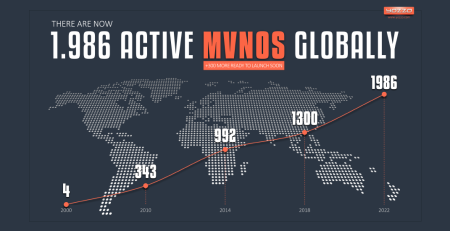
As more public figures and brands recognize this potential, the “boom” is only just beginning, expanding the 2,000-2,300 MVNOs in operation worldwide today, – a stark contrast to the approximately 700-800 Mobile Network Operators (MNOs) that own the underlying network infrastructure globally.