The Butler Brought the Poison but the Regulator Killed the MVNOs
The body lies where it fell. The poison is close by – But who truly killed the Thai MVNOs? (Ai Generated Image)
This is a story that Hercule Poirot would have relished. Not a murder in a dusty library or on a luxury train, but a corporate slaying carried out in the clean, polished conference rooms of Bangkok.
The victim: Thailand’s entire Mobile Virtual Network Operator (MVNO) sector.
The primary suspect, National Telecommunications Public Company Limited (NT), who brought the poison, but as the evidence mounts, the real killer was none other than the very body sworn to protect them: the National Broadcasting and Telecommunications Commission (NBTC).
Check out our podcast: “Thailand’s MVNO Collapse – The Regulatory Inaction that Killed an Industry” – on Spotify or SoundCloud
The Scene of the Crime: A Boardroom Betrayal
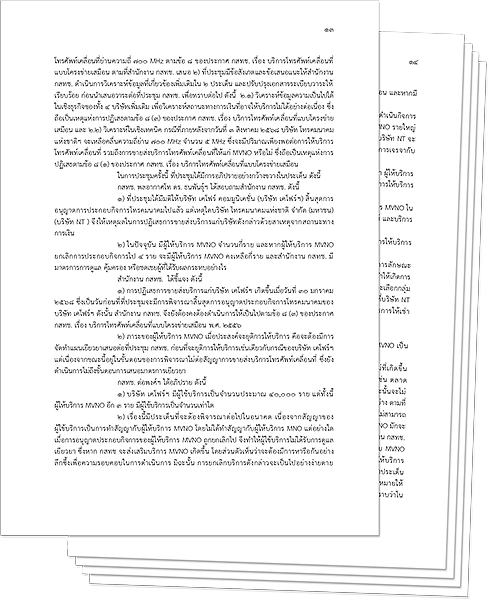
The scene of the crime was the NBTC board meeting on June 23, 2025, about a month before the MVNOs’ demise. The NBTC’s own meeting minutes provide a clear insight into the regulator’s mindset.
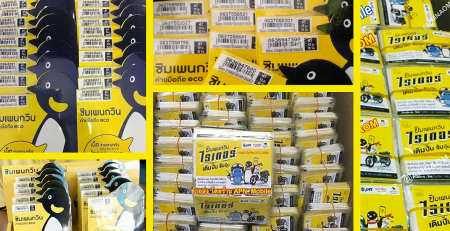
The board was presented with a letter from the state-enterprise telco, National Telecom (NT) stating its refusal to continue to provide wholesale service to four of the six mobile virtual network operators (MVNO) on NT’s network: Penguin SIM (Whitespace), Infinite SIM (Bangkok Tellink), Feels Telecom, and K4 Communication.
NT’s refusal to provide to these four MVNOs was based on financial grounds, with NT citing “the MVNOs’ continual losses”.
It did not mention the two other MVNOs on its network: Ikool (Loxley), and Redone.
Apparently, the NBTC office backed the claim about “financial issues,” yet NBTC’s commissioners themselves questioned the validity of this claim.
The irony of NT’s claim is also notable, given that NT (and its predecessors TOT and CAT Telecom) has never been able to make even a slight dent in the retail market themselves, and has historically struggled to be profitable itself.
Associate Professor Dr. Suphat Suphachalasai, Commissioner of Economics, dismissed the analysis, stating that the justification “should not be listened to,” as it lacked a clear analysis of how continuous losses would affect the ability to provide service, and ignored the fact that many firms operate with accumulated losses. He questioned what criteria were used for the financial analysis.
Prof. Dr. Pirongrong Ramasoota questioned how the board could decide without seeing data on user numbers or revenues.
Assoc. Prof. Dr. Sompop Phuriwikraiphong emphasized that MVNOs had survived in the past because NT’s predecessor, TOT, had both low- and mid-band frequencies— conditions that no longer existed.
Mr. Torpong Selanon pointed out that the service contract is with the MVNO, not the MNO, which means that if an MVNO’s license is revoked, consumers may be left without recourse or compensation. He believed there needed to be a more thorough discussion to ensure that services aren’t easily terminated and that consumers are protected.
Police General Dr. Natthathorn Phuesunthon raised the question of why MVNOs are unable to operate successfully, noting that 118 telecommunication licenses had been issued.
However, more importantly, as in MUCH MUCH MUCH MORE IMPOTANT, in addition to the NT letter, the NBTC office shared with the board that after August 3, 2025, NT would only have the 700 MHz (5MHz bandwidth) and 26 GHz frequency bands remaining.
The NBTC office noted that with only these two bands, it would be difficult for NT to provide service to its own customers, and even more so to give MVNOs network access.
Thus, the NBTC board was presented with a highly critical issue—the impending collapse of the whole MVNO market and its impact on consumers.
Yet, instead of taking decisive action, the majority of the board focused on debating the adequacy of the NBTC office’s technical and financial analysis, and what NT’s rejection would mean to consumers rather than the MVNOs.
The NBTC board’s response was simply to acknowledge NT’s “facts”—a procedural step that effectively rubber-stamped NT’s refusal and killed not just the four MVNOs but all the MVNOs in Thailand.
Two commissioners, Prof. Dr. Pirongrong Ramasoota and Associate Professor Dr. Suphat Suphachalasai, abstained from voting, signaling internal dissent and discomfort with the decision.
But the majority allowed the killing to unfold. This conscious passivity—like debating insurance policies while the house is burning—showed the regulator prioritizing procedural correctness over actively addressing the urgent problem.
A Trail of Red Flags: Warnings Ignored
The NBTC’s failure at the board meeting is not an isolated occurrence but the culmination of years of neglect. A quick timeline illustrates a repetitive cycle:
- August 2023: NBTC Chairman meets with the operators in Thailand for a talk but completely excludes MVNOs.
- September 2023: Yozzo warns of the looming network access crisis directly to the NBTC Chairman.
- October 2023: MVNO Focus Group raises NT’s limited 700 MHz capacity and lack of access to other MNO networks issues.
- May 2024: Public hearing submissions state NT’s 700 MHz band is insufficient for MVNOs and it is a major concern.
- February 2025: Spectrum Auction Workshop MVNA revisits the issue, no solution offered.
- April 2025: MVNO Focus Group repeats the concerns; participants question NBTC’s inaction, and ask the NBTC what they are actually doing with the focus group meeting rather than just sitting and listening, and ask that the NBTC deliver a summary of the focus group hearing outcome. They are still waiting for that!
- May 2025: MVNA files a formal complaint at the Office of the Ombudsman against the NBTC for neglect of duty, in enforcing its own regulation on network access
Each warning was met with acknowledgment but no intervention. Instead, commissioners repeatedly recycled 10+ year-old ideas, such as mandatory MNO-MVNO partnerships or studying cost-based roaming fees, without implementation. The result was paralysis.
The Question of Motive: Was It Malice or Negligence?
The central question remains: Was this MVNO collapse the product of incompetence or deliberate neglect? The evidence points to both.
The NBTC’s endless studies and committees reflected bureaucratic sluggishness. But its exclusion of MVNOs from critical meetings, deference to NT’s claims despite commissioner skepticism, and failure to enforce spectrum reservation policies suggest something more troubling.
By refusing to challenge NT’s justifications and choosing to only “acknowledge” instead of act, the NBTC effectively enabled a market structure where the two major MNOs faced zero competition, and any chance of it.
This raises the possibility that the regulator’s passivity was not accidental but aligned with the interests of dominant operators.
The Unseen Victims: A Market and Its Customers Abandoned
The MVNO collapse also highlights broader structural flaws:
- Policy vs. Practice: Though 10% of spectrum was legally reserved for MVNOs for more than a decade, access barriers made the policy meaningless.
- Capacity Loss: NT’s spectrum erosion after concession expirations crippled its ability to support MVNOs.
- Consumer Harm: Customers—such as the disabled users using Infinite (Bangkok Tellink) SIMs supported by the NBTC universal service obligation (USO) fund —were left stranded, exposing glaring gaps in consumer protection and misuse of public funding.
- Deflection by “Long-Termism”: Rather than addressing the August 2025 shutdown, commissioners distracted themselves with long-term studies and policy debates.
The Final Act: The Silence After the Killing
By August 2025, all MVNOs in Thailand were dead. The collapse was not market-driven but regulator-enabled. Tens of thousands of customers were abandoned, and the chance for competition in Thailand’s telecom sector was wasted. The NBTC’s neglect—whether born of incompetence or deliberate calculation—ensured this outcome.
Commissioners knew the house was burning. They debated its causes, studied its history, and speculated on remedies for future fires. But when it came to extinguishing the flames at hand, they not only stood back and let the house burn, they fueled the fire with bureaucracy.
The story of MVNOs in Thailand is a case study in regulatory failure and neglect of duties. The NBTC had a decade… I repeat, a decade of knowledge, warnings, and policy tools at its disposal, yet chose procedural acknowledgment over intervention. Commissioners debated reforms while deliberately ignoring the collapse unfolding before their eyes. In the end, this ensured that Thailand’s MVNO market did not just fail—it was extinguished by design and neglect.
This behaviour is a recurring pattern. It mirrors the NBTC’s handling of the TRUE-DTAC merger, where the board chose to simply acknowledge the transaction rather than actively intervene. Whether through bureaucratic incompetence or deliberate protection of incumbents, the NBTC’s inaction left Thailand’s telecom market without competition and utterly disregarded consumer welfare.
What is most astonishing and a sound warning to any investor, is that on August 1st, 2025, an entire business sector was effectively killed by a government agency — and nothing happened!
No one has stepped forward to demand accountability, no political outcry has emerged, and even the NBTC board itself seems completely unaware that every MVNO is now out of business. This silence is as troubling as the killing itself, underscoring a regulatory culture that erases failure rather than confronts it.
Podcast: Thailand's MVNO Collapse - The Regulatory Inaction That Killed an Industry
(Video) Thailand's MVNO Collapse - The Regulatory Inaction That Killed an Industry
Check out our video: Thailand’s MVNO Collapse – The Regulatory Inaction That Killed an Industry

Hi, and welcome to Yozzo’s podcast dedicated to empowering mobile virtual network operators with the insights they need to succeed. This is the place where we break down the complexities of the MVNO ecosystem. Let’s get started. All right, today we’re diving into what is essentially a corporate murder mystery. And the victim, yeah, it’s an entire sector of Thailand’s telecommunications industry. So the big question is who’s responsible? Let’s dig in and follow the evidence. So what happens when an entire industry just vanishes overnight? I mean really think about that for a second. You wake up one morning and a whole group of companies, companies that are designed to give you more options, better prices are just gone. How could that even happen?
Well, for Thailand, this wasn’t some hypothetical question. On August 1st, 2025, it actually happened. The signal just went dead for good. So, let’s get into it. To really figure out what went down, we need to go back to the scene of the crime, so to speak, and identify exactly who the victim was in this whole story. The victim here was the **MVNO sector**. Now, you might be asking, what on earth is an MVNO? Well, it stands for mobile virtual network operator. Basically, think of them as these smaller, more agile mobile companies. They don’t own their own cell towers or anything like that. Instead, they rent network space from the big guys. And because of that, they can usually offer really competitive and often much cheaper mobile plans to people like you and me. And on that one single day, August 1st, 2025, all five of Thailand’s remaining MVNOs just stopped their services. We’re talking I-Kool, Penguin SIM, Fields Telecom, Infinite SIM, and Redone. The whole lot of them wiped out. Not a single one survived.
And you can imagine the messages their customers got were pretty sudden and well, final. Just look at this. The notices started rolling in. Infinite SIM basically told its customers, “Hey, our service is ending. You better switch to another provider if you want to keep your number.” Then you’ve got Penguin SIM saying pretty much the same thing. Their host network’s license was expiring, so they had to shut down. You’re starting to see a pattern here, right? And then I cool, which was one of the original MVNOs in Thailand, announced the exact same fate. Just like that, an entire industry was silenced.
Okay. So, who brought the poison? What was the actual weapon in this corporate slang? What was the immediate cause of death here? The final blow, the poison in our mystery, was the loss of something called **spectrum**. Just think of spectrum as the invisible highway that our mobile signals travel on. Now, the state-owned company **National Telecom** or NT was the only network that all these MVNOs were renting space from. And when NT lost its rights to use that spectrum in an auction, well, the MVNO’s were suddenly stranded. They had no highway for their signals to travel on. No network. Game over. On the surface, it sounds pretty straightforward, doesn’t it? A business partner loses a key asset, and so its clients go down with it. But was it really that simple? Or is there more to this story? Was this whole collapse something that could have and maybe should have been prevented?
This is where it gets really interesting because according to the folks who’ve looked into this, the evidence trail goes back way further. This wasn’t just some sudden unavoidable accident. No, they say it was the result of a decade of inaction. And when you look at the timeline, the pattern of neglect is just damning. For years, the national regulator, a group called the **NBTC**, was warned this was coming. You see the meeting with the big mobile operators but leaving the MVNOs out of the room. You have focus groups raising the alarm, public hearings confirming the problem. It all leads up to a formal complaint being filed against them for neglect of duty just a few months before the whole thing imploded. I mean the red flags were absolutely everywhere. So you have to ask how could so many warnings be ignored? Well, it almost seems like it was by design.
The agenda item to actually talk about and support these MVNOs was reportedly postponed by the regulators board over get this **30 times**. More than 30 times they just decided, nah, let’s not deal with this today. They just kept kicking the can down the road. And this right here might just be the smoking gun. There was a rule, a safety net that was put in place all the way back in **2013**. It required the major networks to offer up **10% of their capacity to MVNOs**. This was supposed to guarantee that these smaller companies always had a network to operate on. But here’s the kicker. The regulator apparently never ever enforced it.
So, let’s recap. You’ve got a key rule that’s never enforced. You’ve got years of warnings that are completely ignored. The evidence trail seems to be pointing in one very clear direction, right at the regulator, the very organization whose entire job was to stop something like this from happening. There’s this great quote from an industry analyst, **Alan Rasmussen**, that just sums it all up. He says that National Telecom, yeah, they were like the butler who brought the poison when they lost their spectrum. But he argues it was the **regulator who actually killed the MVNOs** through their complete inaction. And the contrast here is just wow.
On paper, the NBTC’s whole mission is to create competition, protect consumers like you and me, and make sure everyone has fair access. But what they allegedly did was the complete opposite. They failed to enforce their own rules. They ignored all the warnings and then they approved the very spectrum auction they knew would be the final nail in the coffin. When you lay it all out, the accusations create this undeniable pattern of neglect. You’ve got them willfully ignoring that 10% capacity rule for over a decade. Then they failed to enforce the conditions of the big **True/DK merger** that were supposed to help MVNOs. And finally, they green the auction that they knew would kill the MVNO’s host network. In doing all that, they basically gift wrap the market to just two big players, creating a **duopoly**.
Okay, so a whole industry sector is gone. Big deal, right? Why should you, the average person, actually care? Well, this is where it really hits home. Let’s talk about the real world consequences. What we’re left with is this, a market with pretty much **zero real competition**. The time industry is now what you call a duopoly. You’ve got two giants, AIS on one side and the newly merged True/DAC on the other. Together, they control basically the entire market. For any other competitor, the door is effectively slammed shut. And the fallout from that is huge. For you and me, the consumers, it means fewer choices and let’s be honest, probably **higher prices** down the line. For the economy, it’s a disaster. All that local and foreign investment just wasted. People lost their jobs. And it sends this chilling message to any international company thinking about investing in Thailand. Be careful. The regulator might not have your back.
And believe it or not, the stakes are even bigger than that. Right now, Thailand is trying to join the **OECD**. That’s a big deal. It’s like a global club for countries with high standards for things like good government and fair markets. And as you can imagine, a massive regulatory failure like this one, well, it’s a huge red flag that could seriously hurt their chances. So, all of this leaves us with one last big question. Because this story isn’t just about a few telecom companies. It’s about the systems we put in place to protect competition and to protect consumers. When the regulator, the person who’s supposed to be the umpire in the game, fails to do their job